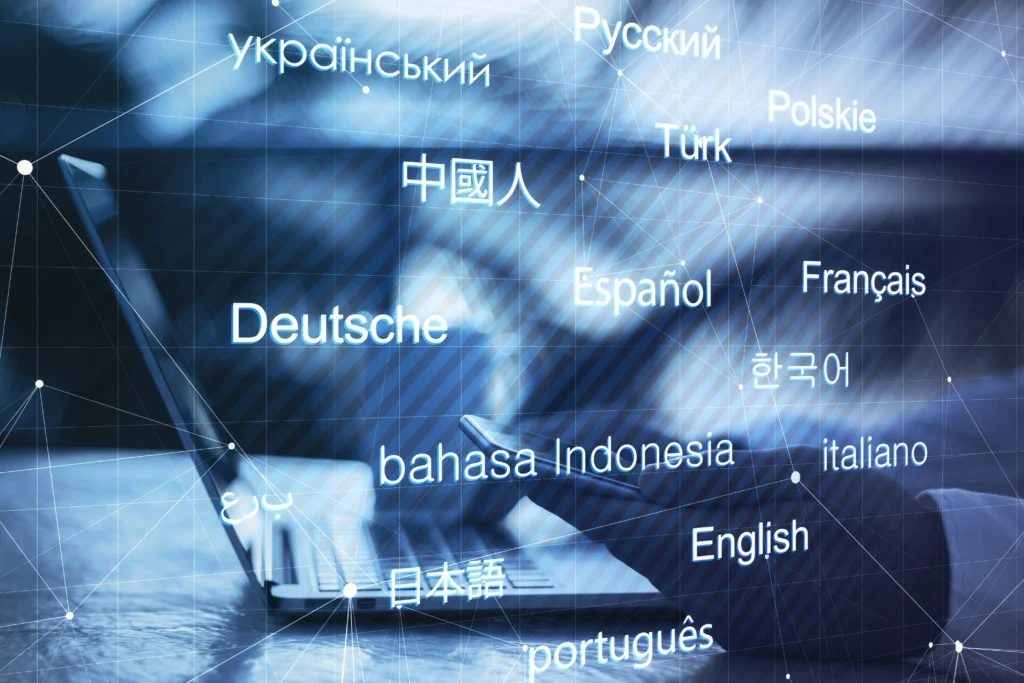
Best enterprise AI multilingual content generation marketing platform helps global teams create, translate, localize, manage, and publish content across multiple markets without losing brand accuracy.
For enterprises, the right choice depends on content volume, languages, approval workflows, integrations, compliance needs, and how much human review is required before publishing.
An enterprise AI multilingual content generation marketing platform is no longer just a translation tool. It now supports brand voice, campaign adaptation, SEO localization, content reuse, regional approvals, workflow automation, translation memory, glossary control, and performance-focused content delivery. For companies expanding into global markets, this type of platform helps reduce delays between content creation and international launch.
For enterprises that want expert implementation, workflow design, and automation support, Qualix Solutions can help connect AI content systems, marketing platforms, localization workflows, and business tools into one practical content operation.
21 Best Enterprise AI Multilingual Content Generation Marketing Platforms
1. Lionbridge Content Remix App
Lionbridge Content Remix App is built for enterprises that need multilingual marketing content across websites, social channels, e-commerce, and campaign assets. It helps teams create fresh content from existing material while supporting multiple languages. It is useful for brands that want AI content generation plus language expertise in one workflow.
2. LILT Create
LILT Create helps enterprises generate multilingual content directly instead of writing in one language and translating later. It supports brand-aligned content creation, translation workflows, and enterprise-level controls. It is a strong option for teams managing product launches, technical content, marketing campaigns, and regional content programs.
3. Argos MosAIQ Muse
Argos MosAIQ Muse is designed for direct-to-language content generation. It helps enterprises create brand-aligned multilingual content using existing brand assets and linguistic data. This platform works well for marketing teams that need ad copy, product descriptions, blogs, and technical content adapted for different markets quickly.
4. Contentful
Contentful is a composable content platform that supports multilingual content operations through AI actions, localization workflows, and reusable content models. Enterprises can manage content across brands, regions, and channels from one place. It is best for teams that want AI-assisted multilingual publishing inside a modern CMS environment.
5. Phrase
Phrase is an AI-powered localization platform for enterprises managing multilingual content across products, websites, apps, and marketing channels. It supports translation memory, glossaries, workflows, automation, and integrations. Phrase is a good fit for companies that need structured localization control across many teams and content systems.
6. Smartling
Smartling helps enterprises translate, manage, and optimize multilingual content across digital platforms. It combines translation workflows, automation, linguistic assets, integrations, analytics, and AI support. It is useful for global brands that need centralized localization management with clear visibility into cost, progress, quality, and publishing timelines.
7. Smartcat
Smartcat is an AI translation and content generation platform for global teams. It supports AI translation, AI content generation, human review, workflow management, and vendor coordination. Enterprises can use it for websites, software, files, learning content, and marketing material that must move quickly across languages.
8. Lokalise
Lokalise is a continuous localization platform for product, marketing, support, and website content. It uses AI translation, translation memory, glossaries, workflows, and integrations to keep multilingual content moving. It is best for enterprises that need fast localization across digital products, campaigns, apps, and customer-facing content.
9. Transifex
Transifex supports multilingual content publishing for websites, apps, and digital products. It helps teams manage translation workflows, AI localization, and content delivery across markets. It is useful for enterprises that need continuous localization, especially when marketing and product teams publish frequent updates in several languages.
10. TransPerfect GlobalLink
TransPerfect GlobalLink is an enterprise language intelligence platform for managing, translating, and optimizing content across languages and channels. It connects AI, human expertise, and enterprise content systems. It is suitable for large organizations that need advanced translation workflows, integrations, governance, and support for high-volume multilingual programs.
11. RWS Language Weaver
RWS Language Weaver is an enterprise AI translation platform for organizations that process large volumes of multilingual content. It supports secure translation, APIs, portals, cloud deployment, and on-premises options. It is a strong choice for enterprises with strict data security, compliance, and high-volume translation requirements.
12. Unbabel
Unbabel is a language operations platform that combines AI translation with human review when needed. It helps enterprises communicate across languages while managing quality and workflow control. It is especially useful for global support, customer experience, and business content where speed and accuracy both matter.
13. XTM Cloud
XTM Cloud is an AI-powered translation management system for global localization teams. It helps enterprises manage translation projects, terminology, workflows, translation memory, quality checks, and integrations. It is a good fit for teams that need centralized control over multilingual content across departments, vendors, and markets.
14. Adobe GenStudio for Performance Marketing
Adobe GenStudio for Performance Marketing helps enterprise marketing teams create on-brand campaign content using generative AI. It supports creative variations, brand controls, campaign workflows, and performance marketing assets. For multilingual programs, it works best when combined with Adobe Experience Manager and enterprise translation workflows.
15. Adobe Experience Manager Sites
Adobe Experience Manager Sites supports enterprise web content management, localization, translation workflows, and global publishing. It helps teams manage regional site versions, language masters, and reusable content. It is best for large brands that need multilingual web experiences with strong governance, authoring, personalization, and enterprise integrations.
16. HubSpot Content Hub
HubSpot Content Hub supports AI-powered content creation, content management, and multilingual website content. Teams can create language variants, translate pages or posts, and manage marketing content from one platform. It is a good option for growing enterprises that use HubSpot for CRM, marketing, and CMS operations.
17. Jasper
Jasper is an AI marketing platform focused on brand voice, campaign content, and content production workflows. It supports multilingual writing and helps teams create blogs, ads, social posts, and marketing copy. It is useful for enterprise marketing teams that need fast first drafts with brand context.
18. Writer
Writer is an enterprise generative AI platform that supports content generation, translation, localization, brand governance, and AI agents. It is built for organizations that need controlled AI output across teams. Writer works well for enterprises that require brand consistency, terminology control, workflows, and internal AI governance.
19. Copy.ai
Copy.ai is a go-to-market AI platform that helps teams automate marketing and sales workflows. Its translation and localization workflows can support product marketing content, emails, campaigns, and repurposing tasks. It is suitable for enterprises that want AI workflow automation rather than only one-off copy generation.
20. DeepL
DeepL is known for high-quality AI translation and enterprise translation tools. It supports glossaries, document translation, API access, and team-based translation workflows. While it is not a full marketing content platform by itself, it is valuable inside an enterprise multilingual content stack for accurate translation.
21. Bynder
Bynder is a digital asset management platform that supports global content operations, brand control, asset workflows, and localization collaboration. It helps enterprises organize approved assets, manage regional content versions, and connect creative teams. It is strongest when used with AI content, CMS, and translation management platforms.
What Is an Enterprise AI Multilingual Content Generation Marketing Platform?
An enterprise AI multilingual content generation marketing platform is software that helps large organizations create and adapt marketing content for different languages, regions, audiences, and channels. It combines generative AI, translation automation, localization workflows, brand governance, and content management.
Instead of writing one English campaign and manually sending it to local teams, marketing teams can use AI to generate first drafts, adapt messages for regional tone, translate assets, check terminology, and route content for approval. This improves speed while still giving teams control over accuracy and compliance.
The best platforms do more than translate words. They support multilingual SEO, product descriptions, ads, emails, landing pages, blogs, help content, social posts, sales collateral, and digital experience content. For enterprises, this matters because global marketing requires consistency across many countries, teams, brands, and channels.
Why Enterprises Need AI for Multilingual Content Marketing
Global enterprises face a simple problem: content demand is growing faster than internal teams can handle. A product launch may need landing pages, ads, email sequences, social media posts, sales enablement assets, and support content in 10, 20, or even 50 languages.
Traditional localization workflows often create bottlenecks. Writers create content, localization teams translate it, regional teams review it, legal checks it, and web teams publish it. Every handoff adds time. AI reduces this delay by creating drafts, suggesting translations, applying glossaries, and automating repeatable workflows.
Enterprises also need stronger control. Brand names, compliance phrases, product terminology, and regional claims must stay accurate. A good enterprise generative AI multilingual content generation marketing platform gives teams guardrails so AI output does not become random, off-brand, or risky.
How to Choose the Right Platform
Before choosing a platform, enterprises should review five areas.
First, check language coverage. Some tools support dozens of languages for marketing copy, while others focus on enterprise translation workflows across hundreds of language pairs.
Second, review brand governance. The platform should support style guides, glossaries, tone rules, approved terminology, and review workflows.
Third, check integrations. Enterprise content rarely lives in one place. The platform should connect with CMS, DAM, CRM, PIM, marketing automation, project management, and analytics tools.
Fourth, evaluate human review options. AI can speed up content work, but high-value campaigns still need subject matter review, legal review, or native-language editing.
Fifth, check security and permissions. Enterprise teams need role-based access, audit trails, approval controls, data protection, and safe AI usage rules.
Comparison- Which Platform Is Best for Your Enterprise?
The best platform depends on the type of content your enterprise produces.
For direct multilingual content generation, consider Lionbridge Content Remix, LILT Create, Argos MosAIQ Muse, Jasper, Writer, or Copy.ai. These platforms are useful when marketing teams need new copy, content variants, campaign assets, and regional messaging.
For localization operations, consider Phrase, Smartling, Lokalise, Transifex, Smartcat, XTM Cloud, GlobalLink, Unbabel, RWS Language Weaver, or DeepL. These platforms are better when your main challenge is translation workflow, terminology, quality review, and multilingual delivery.
For content management and publishing, consider Contentful, Adobe Experience Manager, HubSpot Content Hub, Adobe GenStudio, or Bynder. These platforms are strong when multilingual content must be created, stored, governed, reused, and published across digital channels.
In many enterprises, the best answer is not one tool. A mature setup often includes an AI writing platform, a localization platform, a CMS, a DAM, and workflow automation between them. This is where AI automation consulting becomes valuable because the real benefit comes from connecting the tools into one working process.
Best Use Cases for Enterprise AI Multilingual Content Generation
Global Product Launches
Enterprises can use AI multilingual platforms to create landing pages, ads, product descriptions, emails, sales sheets, and support content for several markets at the same time. This reduces the delay between product readiness and global campaign launch.
Multilingual SEO Content
AI can support keyword research, content briefs, localized blog drafts, meta titles, meta descriptions, and regional content updates. The best platforms help avoid direct translation and instead adapt content for local search intent.
E-commerce Product Content
Retail and e-commerce teams often need thousands of product descriptions in multiple languages. AI helps generate, translate, adapt, and update product content faster while keeping brand tone, product terms, and compliance claims consistent.
Paid Media Campaigns
Global ad teams can use AI to create ad variations by language, audience, offer, and region. This helps teams test more campaign messages while keeping approval workflows and brand rules in place.
Sales Enablement Content
Enterprises can create multilingual pitch decks, email templates, objection-handling guides, comparison pages, and sales scripts. This helps regional sales teams stay aligned with global messaging while still speaking naturally to local buyers.
Customer Support and Knowledge Bases
AI multilingual content platforms can help translate and maintain FAQs, help articles, chat responses, onboarding guides, and troubleshooting content. This improves customer experience in global markets and reduces pressure on support teams.
Benefits of Using an Enterprise Gen AI Multilingual Content Generation Marketing Platform
Faster Content Production
AI reduces the time required to create first drafts, translate content, adapt copy, and prepare regional versions. Teams can move from idea to review much faster than manual workflows.
Better Brand Consistency
Enterprise platforms can apply glossaries, brand voice, approved terms, style guides, and content rules. This keeps messaging more consistent across countries, channels, and business units.
Lower Manual Work
AI can reduce repetitive tasks such as copy adaptation, translation requests, file movement, formatting, and workflow routing. Teams spend more time reviewing strategy and less time managing handoffs.
Stronger Global SEO
Multilingual content should match local search behavior. AI can help adapt headings, metadata, product terms, and page copy for regional search intent instead of only converting words from one language to another.
Improved Governance
Enterprise platforms offer approval flows, permissions, audit trails, and review stages. This is important for regulated industries, large marketing teams, and global brands with strict messaging standards.
Common Challenges Enterprises Should Expect
AI multilingual content generation is powerful, but it still needs structure.
The first challenge is quality control. AI can generate fast drafts, but native reviewers, legal teams, and brand leads may still need to approve important content.
The second challenge is terminology. Product names, legal claims, industry terms, and brand phrases must be controlled through glossaries and style guides.
The third challenge is system integration. Content may start in a CMS, move to a translation platform, return for review, and publish through marketing automation. Without proper automation, teams may still rely on spreadsheets and manual uploads.
The fourth challenge is regional accuracy. A phrase that works in one market may not work in another. Good localization adapts tone, examples, cultural references, currencies, measurements, and buying triggers.
The fifth challenge is governance. Enterprises must decide who can generate, approve, edit, publish, and archive AI-created content.
How AI Automation Consultants Help Enterprises Build the Right Stack
Qualix Solutions can support enterprises that want to connect AI content generation tools with CMS platforms, CRM systems, translation workflows, marketing automation, and reporting dashboards. This helps teams turn AI from an isolated tool into a working content operation.
Best Enterprise AI Multilingual Content Generation Marketing Platform
Best enterprise AI multilingual content generation marketing platform is the one that combines AI content creation, translation, localization, brand governance, human review, CMS integration, and workflow automation. For direct multilingual generation, Lionbridge Content Remix, LILT Create, Argos MosAIQ Muse, Jasper, Writer, and Copy.ai are strong options. For localization operations, Phrase, Smartling, Lokalise, Transifex, Smartcat, XTM Cloud, GlobalLink, and RWS Language Weaver are strong enterprise choices.
Final Thoughts – Enterprise Gen AI Multilingual Content Generation Marketing Platform
Enterprise multilingual marketing is moving from manual translation to AI-powered content operations. The winning teams will not simply generate more copy. They will build systems that create, adapt, approve, publish, and measure multilingual content with control.
The right enterprise generative AI multilingual content generation marketing platform should support your content strategy, brand rules, localization workflow, technology stack, and growth goals. For some enterprises, one platform may be enough. For others, the best setup will combine a CMS, AI writing tool, translation management system, DAM, and automation layer.
Before choosing a platform, define your content types, languages, review process, compliance needs, integrations, and success metrics. Then select the platform that fits your global content operation instead of chasing the tool with the longest feature list.
Enterprise Gen AI Multilingual Content Generation Marketing Platform – FAQs
What is an enterprise AI multilingual content generation marketing platform?
It is a platform that helps enterprises create, translate, localize, manage, and publish marketing content in multiple languages. It usually combines generative AI, translation workflows, brand rules, human review, and integrations with CMS, DAM, CRM, and marketing tools.
Which platform is best for multilingual marketing content generation?
For multilingual content generation, Lionbridge Content Remix, LILT Create, Argos MosAIQ Muse, Jasper, Writer, and Copy.ai are strong choices. The best option depends on your language needs, brand controls, workflow complexity, and existing marketing technology stack.
Is AI translation enough for enterprise marketing?
AI translation alone is not always enough for enterprise marketing. Marketing content often needs localization, brand tone, cultural adaptation, legal review, SEO adjustment, and regional approval. AI translation works best when combined with glossaries, style guides, workflows, and human review.
How do enterprises use generative AI for multilingual content?
Enterprises use generative AI to create campaign drafts, translate assets, adapt copy for local markets, generate product descriptions, write SEO content, create email variations, and support regional teams. The strongest results come when AI is connected to content systems and approval workflows.
What should enterprises check before choosing a multilingual AI platform?
Enterprises should check language coverage, brand governance, security, review workflows, integrations, Managed AI quality, terminology control, reporting, and content publishing support. The right platform should match the company’s content process, not force teams into a workflow that does not fit.
Relevant Guides

Naveed Ahmed is the founder of Qualix Solutions, a custom software and AI solutions company helping founders and operations leaders turn complex business problems into reliable, scalable software. A former Microsoft Technical Leader with 17 years at the company, Naveed held roles spanning software development management, technical product management, data architecture, and information architecture, delivering platforms for deal management, services product data, SAP integration, and workforce skills systems.
At Qualix, he leads a distributed team building SaaS products, web and mobile applications, AI and machine learning solutions, intelligent automation, and data engineering platforms for clients across professional services, healthcare, and telecommunications. Naveed writes about custom software development, AI solutions for mid-market businesses, product strategy, SaaS architecture, and the operational realities of running a modern software company.