
UI and UX design directly influence conversions, customer retention, brand trust, and operational efficiency. Businesses that treat design as a strategic function outperform those that treat it as decoration.
UI/UX Design From a Business Perspective
UI and UX design are often discussed from a creative angle, but their real value lies in business impact.
- UX (User Experience) focuses on how users move through a product, complete tasks, and achieve goals.
- UI (User Interface) focuses on how those interactions look, feel, and respond visually.
Professional ui and ux design services bring these two disciplines together to reduce friction, improve clarity, and guide users toward action.
Practical UI/UX Experience That Drives Results
At Qualix Solutions, UI/UX design is shaped by hands-on experience working with real products, real users, and real constraints. Our team designs interfaces for websites, mobile applications, SaaS platforms, and enterprise systems where usability directly affects revenue and adoption.
This experience helps us design interfaces that solve problems instead of just following trends. Every design decision is tied to user behavior, technical feasibility, and measurable business outcomes.
The Difference Between UI and UX Design
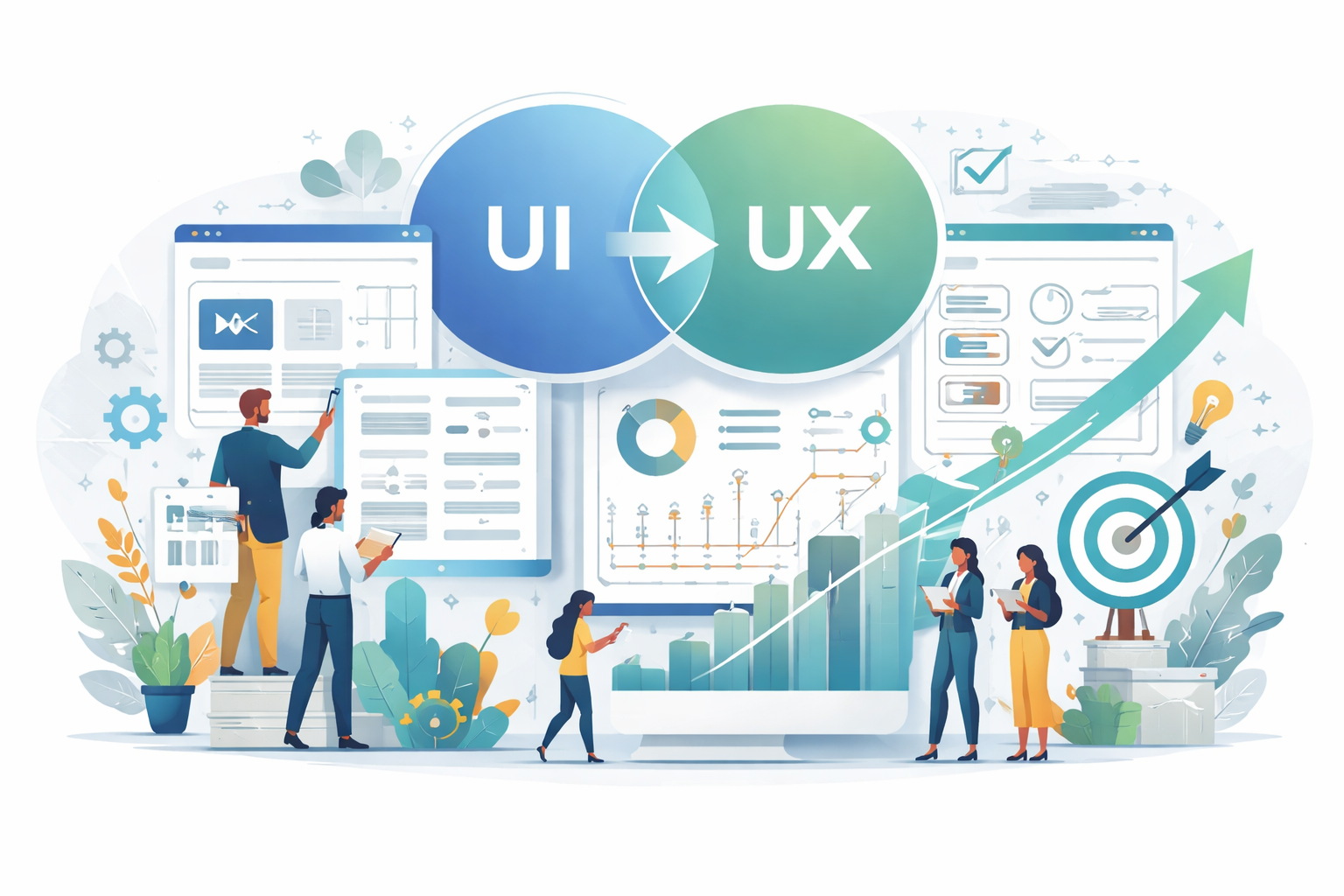
A common question businesses ask is what is the difference between UI and UX design, especially when planning a new product.
Difference Between UI and UX With Example
Consider an online banking app:
UX design defines how users check balances, transfer money, and manage accounts efficiently.
UI design determines how buttons, colors, typography, and layouts make those actions clear and easy to use.
Good UX without UI feels functional but dull. Good UI without UX looks attractive but frustrates users. Growth happens when both work together.
Why UI/UX Design Matters More Than Ever in 2026
User expectations in 2026 are shaped by the best digital products they use daily. Anything below that standard feels broken.
Strong ui ux design and development services help businesses achieve:
Higher Conversions
Clear flows, intuitive layouts, and reduced friction lead users toward decisions instead of confusing them.
Better Retention
Users stay with products that feel predictable and easy. UX builds habits; UI reinforces trust.
Lower Support Costs
Well-designed experiences reduce user errors, confusion, and support requests.
Stronger Brand Credibility
Professional design signals reliability and attention to detail without saying a word.
What Does a UX/UI Designer Actually Do
Many stakeholders still ask, what is a ux/ui designer and what value they bring.
A professional ux ui designer is responsible for:
- Understanding user needs and behavior
- Designing user journeys and interaction flows
- Creating wireframes and prototypes
- Collaborating with developers and product teams
- Testing and refining designs based on real feedback
Experienced ui and ux designers balance user needs, business goals, and technical constraints throughout the product lifecycle.
UI/UX Design Trends Shaping Business Growth in 2026
The design trends for 2026 are shifting the focus away from visual novelty and placing more emphasis on usability and performance. As businesses evolve, it’s becoming increasingly clear that effective user interfaces (UI) and experiences (UX) are no longer just about looking good—they need to work well and perform seamlessly.
Key UI/UX design trends include:
Simpler Interfaces with Fewer Distractions: In 2026, there is a growing emphasis on creating minimalist designs that eliminate unnecessary elements. This approach enhances the user experience by allowing users to focus on essential tasks without being distracted by extraneous content or features.
Accessibility-First Design for Broader User Reach: Accessibility has become a top priority, with more businesses designing products that cater to a wide range of users, including those with disabilities. By incorporating accessibility features, businesses can ensure a more inclusive digital experience and expand their reach to a broader audience.
Data-Driven UX Decisions: Making informed design choices based on real user data is a crucial trend. Businesses are increasingly relying on data analytics to understand user behavior and optimize their designs for maximum engagement and satisfaction.
Consistent Experiences Across Devices: The need for a seamless experience across multiple devices is a priority. Whether users are accessing a website on a desktop, smartphone, or tablet, ensuring consistency in design and functionality is key to keeping them engaged.
Performance-Focused Layouts That Load Fast: Fast load times are critical in retaining users. Performance-driven design ensures that websites and applications load quickly, reducing bounce rates and improving user satisfaction.
In conclusion, trends matter only when they contribute to usability. Design choices made without a clear purpose rarely deliver tangible results, making it essential to prioritize functionality and performance over aesthetics alone.
The Role of Figma in Modern UI/UX Design
Collaboration is critical in modern product teams. Figma for UI/UX design has become widely adopted because it supports real-time collaboration between designers, developers, and stakeholders.
Figma helps teams prototype quickly, maintain consistent design systems, share feedback instantly and reduce gaps between design and development
Using the right tools improves both speed and design quality.
UI/UX Design Services vs DIY Design Approaches
Some businesses rely on templates or internal teams to save costs. While this can work short term, it often limits scalability.
Professional ux/ui design services provide:
- Research-driven design decisions
- Custom solutions aligned with business goals
- Scalable design systems
- Designs that translate cleanly into development
DIY approaches often lead to usability issues that surface only after launch, when fixing them becomes expensive.
UI and UX Design Services for Different Business Stages
Different business stages require different design strategies.
Startups
Startups benefit from UX-focused MVPs that validate ideas quickly and avoid unnecessary features.
Growing Businesses
Scaling companies need consistent design systems that work across products and platforms.
Enterprises
Large organizations rely on ui ux design and development services to manage complex workflows, security requirements, and large user bases.
Custom design adapts to business complexity rather than forcing businesses into rigid patterns.
How UI/UX Design and Development Work Together
UI/UX design works best when it is closely aligned with development. The most successful design and development outcomes happen when teams collaborate early in the process. This ensures that designs are not only visually appealing but also technically feasible and functional. Early collaboration also ensures that performance is prioritized from the start, which helps to reduce development time. As a result, the final product is more likely to meet user expectations and perform well in real-world use cases.
When teams work in isolation, the product might look great initially but fail to meet user needs or provide the intended experience. This disconnect can lead to wasted resources and missed opportunities for improvement.
Why Businesses Invest in UI/UX Design Services
Businesses invest in UI/UX design services because well-crafted designs directly impact their revenue. Design decisions affect user behavior, and when done right, they can lead to significant business growth. A strong design helps:
- Improve engagement: A well-designed interface keeps users engaged and encourages longer interaction.
- Increase conversions: Effective design elements guide users toward taking desired actions, like making a purchase or signing up.
- Reduce churn: A seamless user experience encourages retention and lowers the risk of users leaving.
- Support long-term scalability: Good design is flexible, allowing businesses to adapt to new needs and grow without needing constant redesigns.
Common UI/UX Mistakes That Hurt Growth
Even well-funded projects can struggle due to avoidable design mistakes. Common errors include skipping critical user research, prioritizing visuals over usability, and ignoring mobile-first behaviors. Overloading interfaces with unnecessary features or failing to test designs with real users can also harm the product’s success. These mistakes hinder user satisfaction and business growth. To avoid these pitfalls, companies need a structured design process and experienced designers who can ensure designs are aligned with user needs and business objectives.
Why Qualix Solutions Focuses on Business-Driven UI/UX Design
At Qualix Solutions, we prioritize business-driven outcomes in our UI/UX design approach. Our services are grounded in understanding user behavior, technical constraints, and long-term scalability. We focus on:
- Practical UX strategy: Our designs are not just creative but are driven by business goals and user needs.
- Development-ready design outputs: We ensure that designs are ready to be implemented by developers, reducing time and effort during the build phase.
- Cross-team collaboration: We work closely with development teams to ensure smooth implementation and consistent design throughout the process.
- Clear documentation and iteration: Our process includes thorough documentation and feedback loops to improve designs over time.
This approach guarantees that products not only meet launch-day expectations but also perform well and adapt after launch.
UI/UX Design as a Long-Term Growth Investment
UI/UX design should not be seen as a one-time project but as an ongoing investment. As markets, technologies, and user expectations evolve, so should the design. Companies that approach design as a continuous improvement process benefit from:
- Higher customer satisfaction: Regularly updated designs ensure the product stays relevant and continues to meet user needs.
- Better product adoption: A thoughtful design strategy leads to smoother product adoption by users.
- Lower maintenance costs: Consistent improvements reduce the need for major redesigns down the road.
- Greater adaptability: A flexible design allows businesses to pivot more easily in response to changes in the market or user behavior.
This mindset sets successful, growing businesses apart from those that become stagnant, ensuring they remain competitive in an ever-evolving digital landscape.
Conclusion
In 2026, business growth depends heavily on how users experience your digital products. Strong UI UX design services help businesses convert attention into action and users into long-term customers.
Understanding the difference between UI and UX design, working with experienced ui and ux designers, and using modern tools like Figma for UI/UX design allows businesses to build products that users trust and enjoy.
For companies focused on sustainable digital growth, professional ui ux design and development services are no longer optional, they are foundational.
FAQs
Who offers UI/UX design services for healthcare products?
Experienced UI/UX agencies with healthcare expertise, like Qualix Solutions, design secure, compliant, and patient-friendly digital products. We focus on usability, accessibility, and workflows that support real clinical and patient needs.
What does a UI UX design services company do in USA?
A UI UX design services company in the USA researches users, designs interfaces, and improves digital experiences to drive conversions and engagement. At Qualix Solutions, we align design decisions with business goals and measurable outcomes.
What is the primary goal of good user experience UI/UX?
The primary goal of UI/UX is to make digital products easy, intuitive, and efficient for users. Good UX removes friction, builds trust, and guides users toward meaningful actions.
How much does it cost on a UI/UX designing project?
UI/UX design costs typically range from a few thousand dollars for small projects to higher budgets for complex platforms. The final cost depends on research depth, screens, complexity, and customization required.
What is the 80/20 rule in UI/UX designing?
The 80/20 rule states that 80% of user value comes from 20% of features. Smart UI/UX design focuses on optimizing those core interactions that users rely on most.
Relevant Guides & Services

Naveed Ahmed is the founder of Qualix Solutions, a custom software and AI solutions company helping founders and operations leaders turn complex business problems into reliable, scalable software. A former Microsoft Technical Leader with 17 years at the company, Naveed held roles spanning software development management, technical product management, data architecture, and information architecture, delivering platforms for deal management, services product data, SAP integration, and workforce skills systems.
At Qualix, he leads a distributed team building SaaS products, web and mobile applications, AI and machine learning solutions, intelligent automation, and data engineering platforms for clients across professional services, healthcare, and telecommunications. Naveed writes about custom software development, AI solutions for mid-market businesses, product strategy, SaaS architecture, and the operational realities of running a modern software company.