Developing an iOS app in 2026 requires more than just a development budget. The iOS application development cost depends on how the app is designed, how it scales, and how it supports business goals over time. Companies that understand these factors early avoid cost overruns and build more sustainable products.
This guide explains what drives iOS app costs, how pricing varies by app type, and what businesses should budget realistically.
What Is the Average Cost to Develop an iPhone App?
The average cost to develop an iPhone app in 2026 varies widely based on functionality and technical requirements.
- Simple iOS apps: $15,000 – $25,000
- Mid-level business apps: $30,000 – $60,000
- Advanced or enterprise apps: $70,000 – $150,000+
The final iOS app development cost reflects how much customization, backend infrastructure, and long-term support the app requires.
Core Factors That Influence iOS Application Development Cost
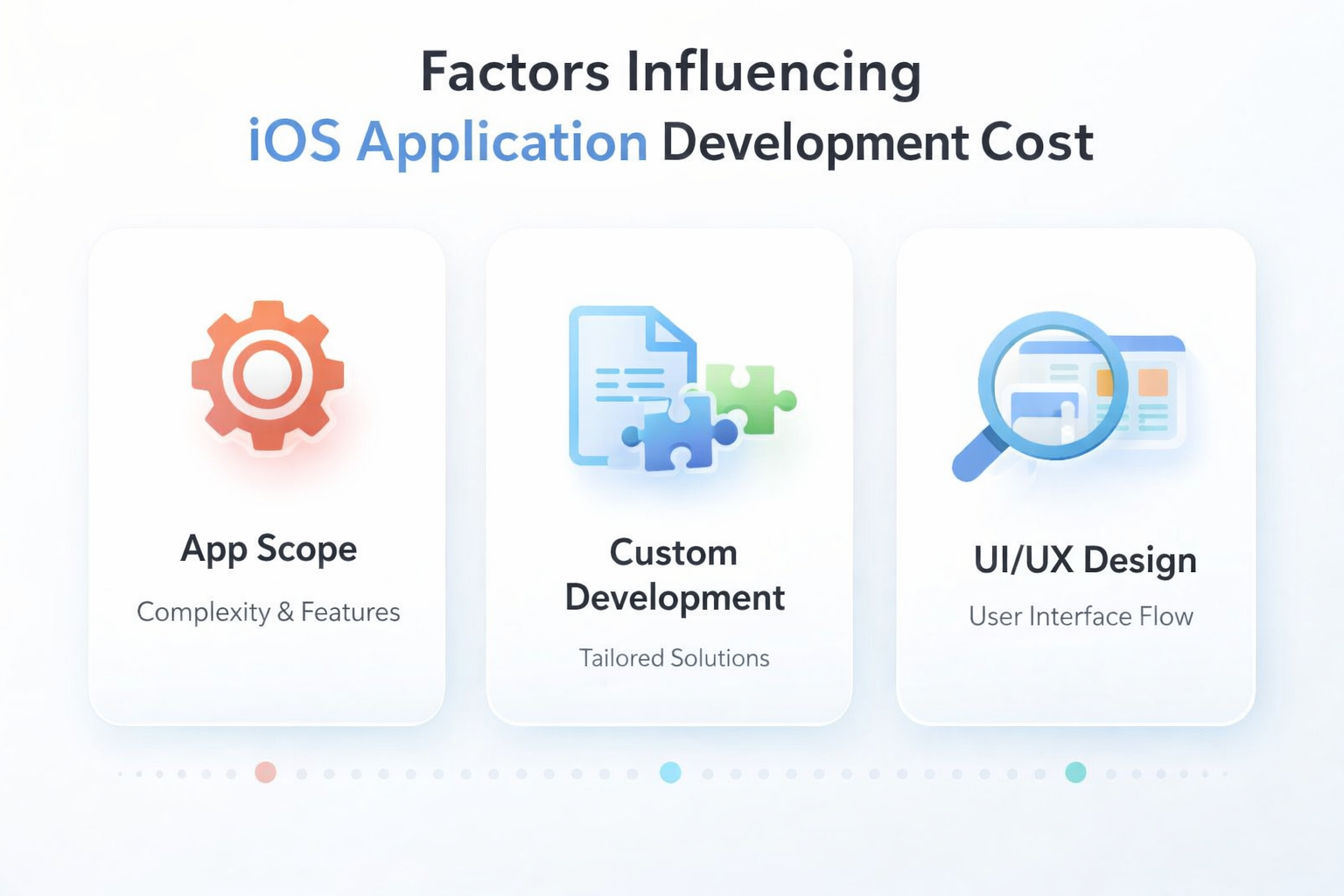
App Scope and Feature Set
The number and complexity of features directly affect the cost to create an app for iPhone. Apps with basic content and navigation cost significantly less than those requiring real-time data, integrations, or advanced logic.
Custom iPhone App Development
Custom iPhone app development increases upfront cost but delivers stronger performance, better security, and easier future upgrades. Businesses that choose custom development reduce long-term maintenance issues and platform limitations.
UI/UX Design Requirements
Design plays a major role in the iOS app development price. Apps with branded layouts, animations, and user-focused flows require more design and testing effort than template-based interfaces.
Backend Development and Infrastructure
Apps that store data, support user accounts, or process transactions need backend systems. These elements increase the cost of developing an app due to:
- Server setup
- API development
- Database management
- Security measures
Testing and Device Compatibility
Ensuring compatibility across iOS versions and Apple devices adds time and cost. Proper testing reduces post-launch issues and improves user retention.
iOS Application Development Cost by App Type
Basic iOS Applications
These apps include static content, limited interactions, and no backend systems.
Business and Startup Apps
These apps support user accounts, payment systems, and admin features.
Enterprise-Level iOS Apps
Enterprise apps handle large user volumes, advanced security, and complex integrations.
| App Type | Typical Use Case | Price Range |
| Basic App | Informational, MVP | $15,000 – $25,000 |
| Startup / Business App | Booking, eCommerce, dashboards | $30,000 – $60,000 |
| Enterprise App | Large-scale users, integrations | $70,000 – $150,000+ |
| AR iOS App | ARKit, 3D rendering | $60,000 – $150,000+ |
Cost to Develop AR Applications in iOS
The cost to develop AR application in iOS is higher due to specialized requirements such as 3D rendering and real-time processing. AR apps typically start at $60,000 and can exceed $150,000, depending on complexity and performance demands.
Apple Developer Account and Licensing Costs
Apple requires developers to maintain an active account to publish apps.
Licence Cost
- Apple Developer Program: $99 per year
Account Cost for Enterprises
- Apple Developer Enterprise Program: $299 per year
These fees are fixed and must be included in overall cost planning.
Ongoing Costs After App Launch
Initial development is only part of the total investment. Ongoing expenses affect the long-term cost of developing an app.
Common post-launch costs include:
- App updates and bug fixes
- iOS compatibility upgrades
- Server hosting and monitoring
- Feature enhancements
Annual maintenance typically ranges from 15% to 25% of the original development cost.
Mobile App Development for iOS: Cost vs Value
The lowest-priced app often becomes the most expensive over time due to poor scalability and frequent fixes. High-quality mobile app development for iOS focuses on long-term stability, performance, and user experience.
A well-built app:
- Reduces future redevelopment costs
- Improves user retention
- Supports business growth
How to Control iOS App Development Cost in 2026
Businesses can manage costs effectively by:
- Defining a clear MVP
- Prioritizing essential features
- Validating requirements early
- Choosing experienced iOS mobile app development services
- Planning for scalability from the start
Clear planning prevents unnecessary rework and delays.
Choosing the Right iOS App Development Partner
Reliable iOS mobile app development services provide:
- Transparent pricing
- Realistic timelines
- Long-term technical support
- Secure and scalable solutions
The right partner helps balance budget constraints with product quality.
Final Thoughts
The iOS application development cost in 2026 depends on thoughtful planning, clear requirements, and the right technical approach. From basic apps to complex AR solutions, understanding cost drivers allows businesses to invest wisely.
Instead of focusing solely on initial pricing, successful companies plan for long-term value, performance, and scalability. When built correctly, an iOS app becomes a strategic business asset rather than a recurring expense.
FAQs
How much does it cost to build a fully featured iOS app in 2026?
A fully featured iOS app in 2026 typically costs between $30,000 and $150,000 or more. The final cost depends on features, integrations, design complexity, and scalability needs.
Is it cheaper to build iOS apps with Flutter or native iOS?
Flutter can reduce development costs for multi-platform apps, but native iOS often delivers better performance and stability. The right choice depends on long-term goals, user experience needs, and app complexity.
Can AI platforms help lower iOS app development costs?
AI platforms can reduce costs by speeding up development, testing, and design workflows. However, human expertise is still essential for architecture, security, and quality assurance.
How long does it take to build an iOS app from scratch?
Building an iOS app usually takes 3 to 6 months, depending on scope and complexity. Advanced or enterprise-level apps may require longer timelines for testing and integrations.
Do iOS apps need yearly updates and maintenance?
Yes, iOS apps require regular updates to stay compatible with new iOS versions and devices. Ongoing maintenance also improves security, performance, and user experience over time.
Relevant Guides & Services
What Are the Top Features of Supply Chain Management Software