



Procure Builder project wordmark, highlighted color card logo

They handed us a spreadsheet. We built the system their material runs on.

A role based ERP that put procurement, inventory, budgets and approvals for a multi site construction firm into one platform, from the C suite to the job site.

procure-builder-logo
Industry
Construction
Type
Internal ERP / SaaS
ICP
Business Owners, Mid-Market
Roles
Admin, Engineer, Field Worker
Timeline
6 Months
Stack
.NET, React JS, Tailwind CSS, TypeScript, Antdesign
Tell us what you're building
  • Excel
  • WhatsApp
  • Verbal Updates
  • Scattered Processes

Before

Procure Builder square flame badge on orange gradient
  • One role based ERP
  • Workflow approvals
  • Real time updates
  • Unified Process

After

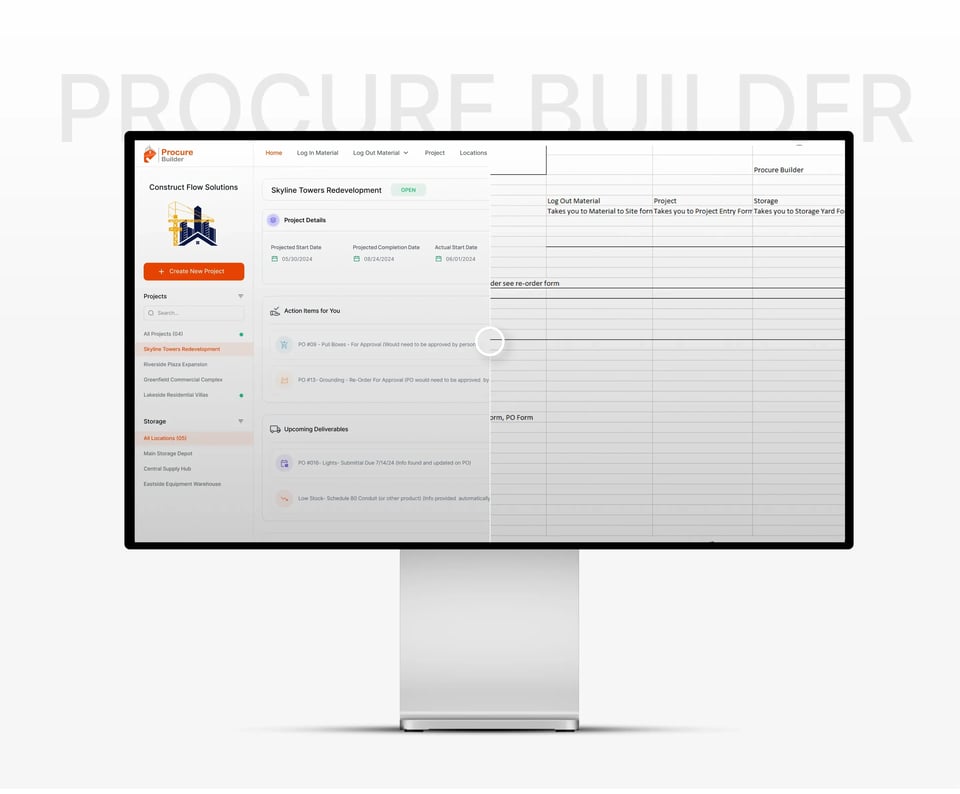
Procure Builder showcase band with watermark wordmark and monitor comparing app against spreadsheet
The problem

Material is the budget,and nobody could see it

Procure Builder runs residential and commercial projects across several active sites at once. On a build that size, material is the budget. But the firm was coordinating it the way most builders do: a rough spreadsheet, a WhatsApp thread, and whoever picked up the phone.

What that cost them, every week:

[01]

Crews lost hours hunting for materials nobody could locate across sites.

[02]

The same items were over ordered on one site and short on another, so work stalled either way.

[03]

No one could see actual spend against the budget until it was already blown.

[04]

Purchase orders had no consistent approval path, so things bottlenecked and nobody owned the call.

The design

The brief was a list of screens. The job was an operating model.

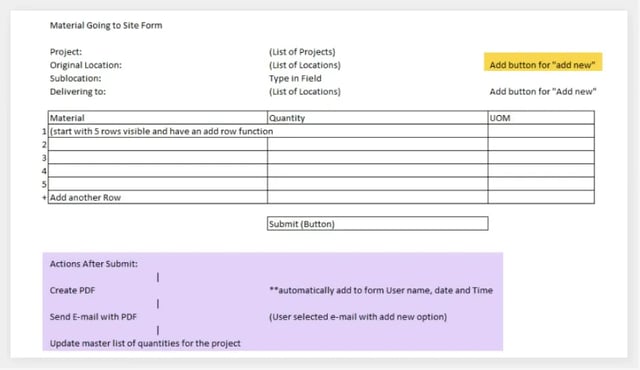
The client handed us a spreadsheet of modules and ideas, a wishlist of forms, not a description of how their business actually works. We didn't build a tidier spreadsheet. In deep sessions with their CEO, we mapped how material really moves through a construction firm, then built the software around that flow.

The approval workflow is the product. Transparency from C suite to on site is what turns coordination chaos into control.

Described by what it lets each role do, not a feature list:

[01]

Admins see actual vs planned spend across every site, in one view.

[02]

Engineers raise a PO the moment stock runs low, and approvers sign off remotely.

[03]

Field teams find any item down to the warehouse, zone and aisle, and log transfers between sites as they happen.

[04]

Everyone works from one source of truth, with alerts when material is en route, received, or running low.

Development

Inside the build

[01]The spreadsheet trap

The starting brief looked like a head start. Tabs, fields, modules already sketched. It wasn't. It encoded no real workflow logic: no approvals, no roles, no sense of how a reorder becomes a delivery. If we'd built it as drawn, we'd have shipped the chaos with a nicer font. So before a single screen, we reverse engineered the actual operations with the CEO. That groundwork is why the rest of the build held up.

[02]We designed for the site, not the office

The users who'd touch this most aren't at desks. Many on site crew are low literacy or don't read English, and a dense, text heavy ERP would simply die on a job site. So the field experience isn't a stripped down admin screen. It's its own thing: icon driven, big targets, the fewest possible steps to log what matters. The complexity stays where the complexity is welcome, with the admins.

[03]The out of budget decision

An obvious move was to block any purchase that broke the budget. We didn't, because construction doesn't work that way. Sometimes you have to buy the part today and reconcile it later. So an out of budget purchase doesn't hit a wall. It triggers a change order and an approval. The budget stays honest, the site keeps moving, and the override is on the record. A small decision that came straight from how the work actually runs.

Delivery

What shipped

A working design system and clickable platform in a 6 week design phase, run on a hybrid Double Diamond and Lean UX process with internal and client validation built in.

[01]

One platform

replaced Excel, WhatsApp and verbal updates as the system of record.

[02]

Workflow based approvals

now run end to end, visible from C suite to on site.

[03]

A field experience

real crews can actually use, regardless of literacy or language.

[04]

Two hi fi directions

were presented; the client chose the cleaner white theme as the visual language.

Read more case studies

Operations Platform
cis-case-study-logo

From spreadsheet commission chaos to one auditable source of truth

A telecom and IT services brokerage was running catalog, orders, and multi party commissions across a generic CRM and a sprawl of Excel. We rebuilt it as a single operational platform with the commission engine at its core.

Read Case Study
See All Case Studies

Got a process living in a spreadsheet that's outgrown it?

Tell us what you're building