Web3 iOS App Development

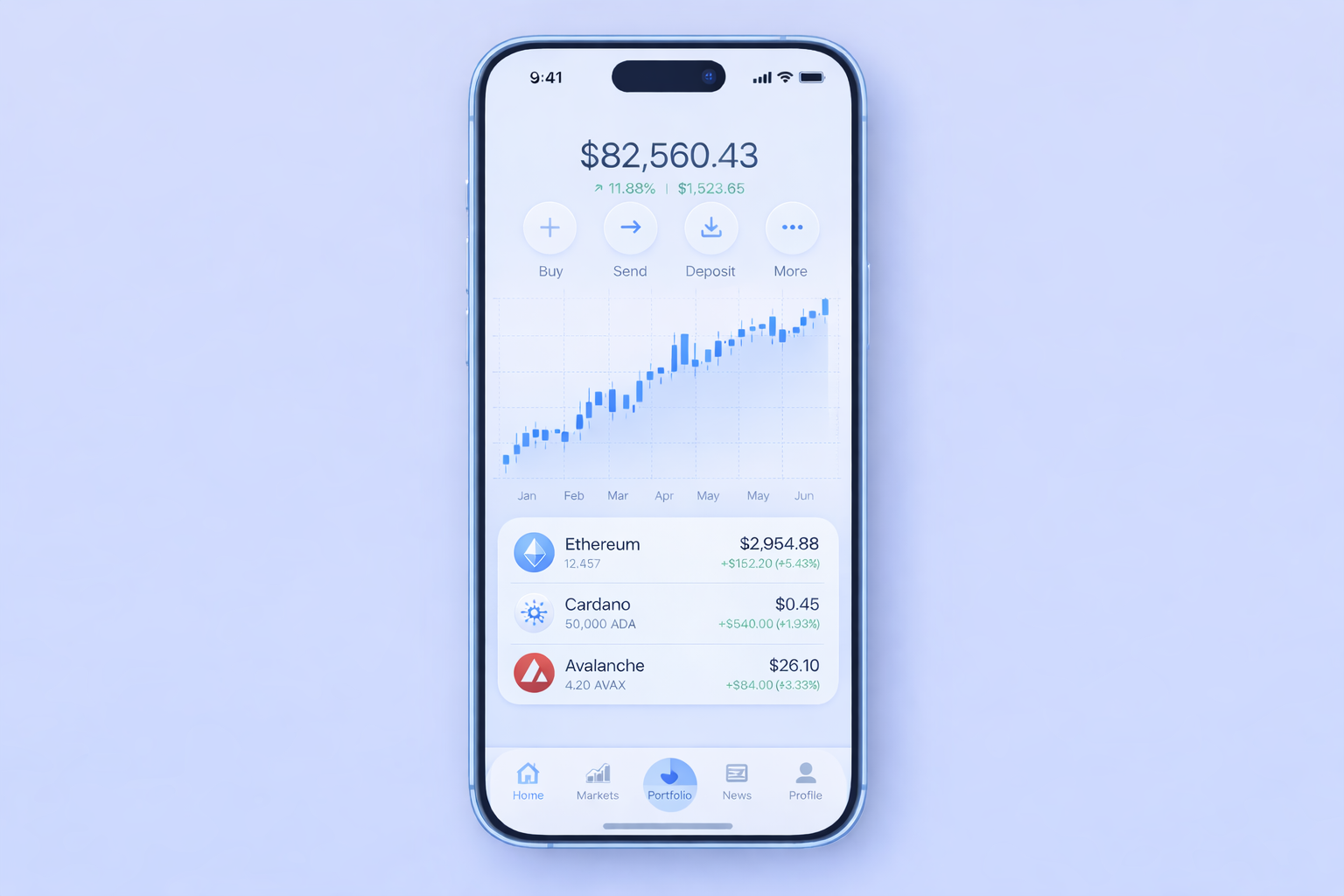
A modern Web3 iOS app interface displaying portfolio stats, blockchain data visualizations, and cryptocurrency values, all integrated into a sleek mobile dashboard on a smartphone.
Web3 iOS app development is redefining how mobile applications are created and experienced on Apple devices. Traditional iOS apps rely on centralized servers and controlled data systems. In contrast, web3 iOS app development enables fully decentralized applications where users own their data, control their identities, and interact directly with blockchain networks. Adoption of Web3 apps development is growing rapidly as more companies seek security, transparency, and user empowerment in their mobile products.

With the rise of decentralized finance, tokenized assets, and next generation cryptographic services, web3 ios technologies are driving a new class of mobile software. In this guide, you will learn what Web3 means for Apple platforms, how web3 in iOS apps works, which tools and frameworks to choose, and the strategic benefits and challenges of building decentralized mobile applications. Understanding this ecosystem will help you build next generation mobile experiences that attract users and deliver long term value.

Section 1: What is Web3 iOS App Development?

Web3 iOS app development refers to building mobile applications for iPhone and iPad that integrate decentralized technologies such as blockchain networks, smart contracts, and peer to peer authentication. These apps offer a shift away from centralized infrastructure to models where users control their own data and cryptographic keys.

At its core, Web3 is about decentralization. Traditional apps store user accounts and content on central servers owned by companies. Web3 apps connect to distributed blockchain nodes where data is shared securely across networks that do not require a single central authority. This allows mobile applications to provide greater transparency, stronger security, and global interoperability for digital assets and identity services.

Web3 in iOS systems typically involves integrating wallets, blockchain networking libraries, smart contract calls, and decentralized storage with native UI components in Swift and Xcode. Instead of relying on email passwords or database authentication, users can authenticate and sign transactions using decentralized wallet credentials.

Section 2: Why Web3 Matters for iOS Apps

Understanding why Web3 matters starts from the contrast between how data is managed in traditional apps versus decentralized systems.

User Ownership of Data

Web3-based applications give users complete ownership and control of their digital assets and personal information. Centralized platforms often collect and manage user data on private servers. Decentralized design puts the user in control of their keys and access rights, enabling stronger privacy and user agency.

Enhanced Security and Trust

Blockchain technologies provide secured transaction validation without intermediaries. Smart contracts automate business logic and record confirmed activity in immutable ledgers, protecting against fraud and unauthorized manipulation. This increases trust for financial services, digital rights platforms, and identity verification flows.

New Revenue Models

Web3 iOS applications create new ways to monetize products and services, including token gating, on-chain payments, NFT marketplaces, and decentralized finance modules built directly into the user experience. These features unlock revenue streams unavailable in traditional models.

Decentralized Identity and Authentication

Web3 apps can authenticate users using decentralized identity schemes that eliminate the need for usernames and passwords. This reduces risk while improving user experience, especially for mobile services requiring frequent authentication.

Section 3: Core Components of Web3 iOS Applications
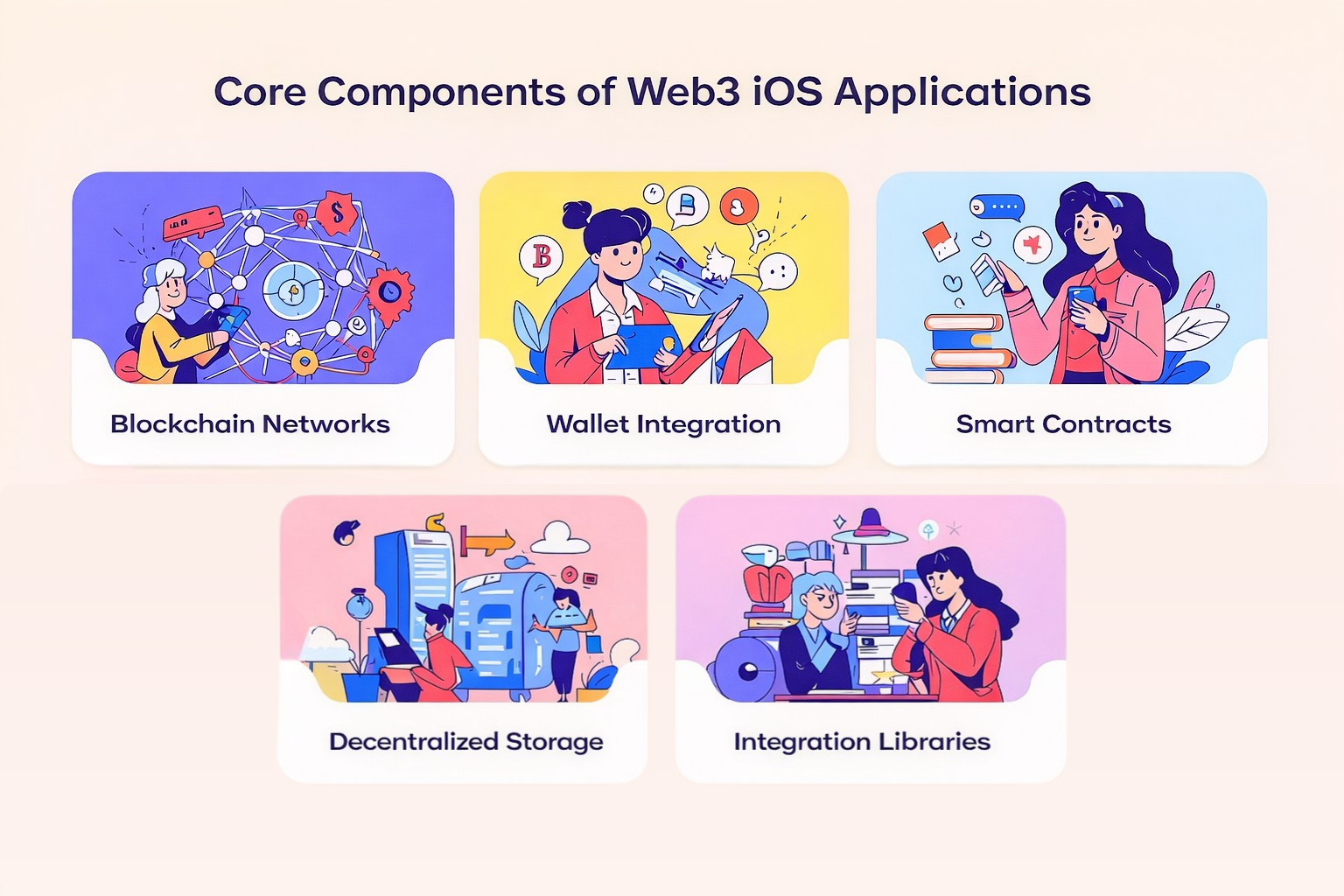
Core Components of Web3 iOS Applications infographic showing Blockchain Networks, Wallet Integration, Smart Contracts, Decentralized Storage, and Integration Libraries. Visual breakdown of Web3 technologies for iOS apps development

Building Web3 enabled apps on iOS requires understanding the main layers and functions of decentralized technologies.

Blockchain Networks

Web3 apps connect to blockchain networks such as Ethereum, Solana, or layer 2 solutions. These networks act as decentralized backends where transactions can be verified and recorded across distributed nodes. Network providers like Alchemy and Infura enable secure connections without running full nodes.

Wallet Integration

Wallets are central to Web3 authentication and transactions. Users connect wallets like WalletConnect or MetaMask Mobile to authenticate and sign transactions. Integrating wallets into iOS apps enables token transfers, balance checks, and smart contract interactions securely.

Smart Contracts

Smart contracts are self executing rules that run on blockchain networks. These contracts handle business logic for token exchanges, decentralized finance protocols, and governance features without manual server control.

Decentralized Storage

Applications often use decentralized storage systems like IPFS or Filecoin to store data in distributed networks instead of centralized servers. This improves resilience and data persistence across networks.

Integration Libraries

Web3 libraries such as Web3.swift, EthereumKit, and native SDKs allow iOS apps to communicate with blockchain networks, handle contracts, and update UI based on decentralized state. Developers use these libraries to connect smart contract data with native app components.

Section 4: Tools and Frameworks for Web3 iOS App Development

Choosing the right stack is critical for quality delivery and performance.

Swift and Xcode

Swift is the official language for iOS app development, and Xcode is the primary IDE. These tools are essential for creating native applications with responsive UI, secure data handling, and compatibility with Apple guidelines.

Web3 Libraries

  • Web3.swift and EthereumKit provide native integration with Ethereum and other networks.
  • WalletConnect integrations allow secure wallet connections using deep links or QR scans.

These libraries let developers build core decentralized features for wallets and contracts.

Blockchain Node Providers

Services like Alchemy, Infura, and Moralis simplify connection to blockchain networks without running your own node infrastructure. They provide APIs for data reads, event subscriptions, and transaction broadcasting.

Smart Contract Tools

Tools such as Remix IDE, Hardhat, and Ganache assist developers in writing, testing, and deploying smart contracts before linking them to iOS applications.

Decentralized Oracles and Data Indexing

  • Chainlink enables external data integration for reliable real world data.
  • The Graph indexes blockchain data for efficient queries.

Such tools connect off chain data to on chain logic in web3 applications.

Section 5: Step by Step Web3 iOS App Development Process
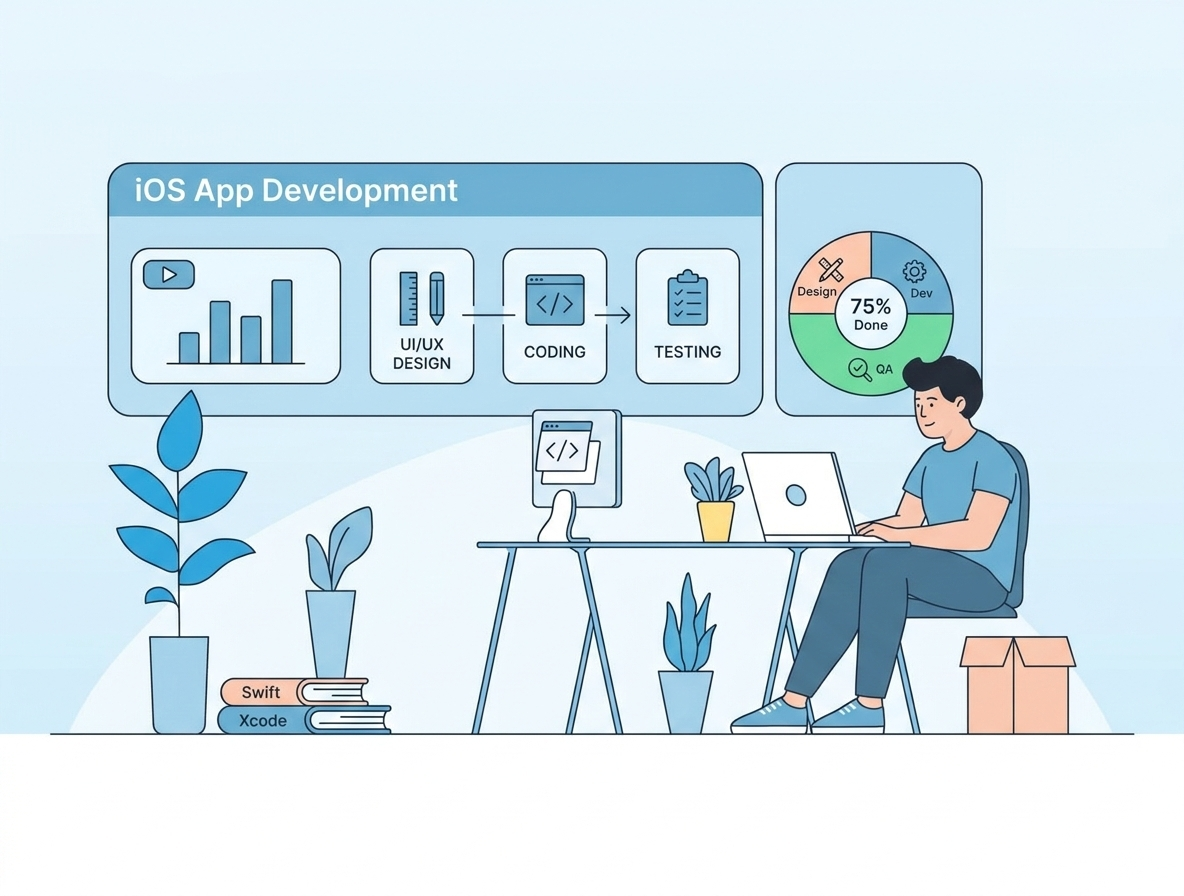
Web3 iOS app development process: Workflow from planning to deployment with UI/UX design, coding, testing, and smart contract integration

This section explains a general workflow for building web3 iOS applications from planning to deployment.

Step 1: Define Objectives and Business Logic

Outline what decentralized features your app will provide. Identify whether you need crypto payments, wallet support, token based access, or smart contract automation.

Step 2: Choose a Blockchain Network

Select a blockchain network based on cost, speed, and ecosystem needs. Ethereum and layer 2 solutions remain popular for token standards and broad tool support.

Step 3: Design Wallet Interactions

Implement wallet connections using SDKs that allow users to authenticate and sign transactions securely. A seamless wallet experience is critical for adoption.

Step 4: Write Smart Contracts

Develop and test smart contracts that will run decentralized logic. Deploy on test networks for validation before going live.

Step 5: Blockchain Integration in iOS

Use Web3 libraries to connect user actions in the UI to blockchain calls. For example, a token transfer or contract call must be reflected correctly in the app interface.

Step 6: Testing and Optimization

Extensive testing on both smart contracts and iOS app code is essential for security and performance. Tools like Ganache and testnets help simulate real blockchain activity.

Step 7: Launch and Monitor

After testing, submit your app to the App Store and continuously monitor blockchain services and SDK dependencies to maintain compatibility and security.

Section 6: Challenges in Web3 iOS App Development

Even though Web3 brings innovation, the transition from traditional apps has challenges.

Technical Expertise

Web3 technologies require knowledge of blockchain networks, cryptography, and decentralized architecture, which can be new for many developers.

User Onboarding UX

Users unfamiliar with wallets or key management may struggle with onboarding unless UI flows are designed with simplicity in mind.

Smart Contract Risks

Bugs in smart contracts cannot be fixed after deployment without careful auditing. Strong security reviews are mandatory before launch.

Regulatory Considerations

Cryptocurrency handling and token systems may require compliance with financial regulations in different regions. Legal guidance should be included during planning stages.

Section 7: Use Cases for Web3 iOS Apps

Web3 iOS applications are already emerging in many industries.

NFT Marketplaces

Apps that allow users to mint, trade, and sell NFTs directly from their iPhone using wallet support.

Decentralized Finance Apps

iOS apps that let users participate in lending, borrowing, asset swaps, and yield farming without intermediaries.

Identity and Authentication Services

Secure login and identity management using decentralized identity solutions.

Gaming with Digital Asset Ownership

Games where players truly own in‑game assets that can be traded or transferred outside the game environment.

Conclusion

Web3 iOS app development is more than a trend. It represents the future of mobile software where decentralization, user ownership, and programmable contracts redefine engagement. Developers who embrace web3 apps development will build more secure, transparent, and user centered experiences for mobile users.

At its core, web3 iOS app development combines decentralized networks, smart contract automation, and native iOS design skills to deliver innovative solutions that compete in the changing landscape of mobile technology. Adopting Web3 is not only a strategic advantage for businesses looking to attract new users but also a framework to build future mobile ecosystems that put control back into the hands of the user.

FAQs

What is web3 iOS app development?

Web3 iOS app development refers to building mobile applications for Apple devices using decentralized technologies like blockchain, smart contracts, and wallets. These apps enable user owned data, transparent transactions, and interaction with decentralized networks rather than central servers.

How is web3 in iOS different from traditional iOS app development?

Traditional iOS apps depend on centralized servers and managed backend systems, while web3 iOS apps connect to blockchain networks and decentralized storage. This gives users control over their digital identity and assets instead of relying on a company’s server.

Do users need crypto to use a web3 iOS app?

Not always. Some web3 iOS apps offer basic features without requiring cryptocurrency, but for wallet transactions, token transfers, NFTs, or smart contract interactions, holding crypto and connecting a Web3 wallet is often necessary.

What tools are required for web3 iOS app development?

Developers use native tools like Swift and Xcode, plus web3 libraries such as Web3.swift or EthereumKit, wallet integration SDKs, and blockchain API providers to connect iOS apps to decentralized networks and smart contracts.

Are web3 iOS apps secure for users?

Web3 iOS apps can be more secure because blockchain records are immutable and cryptographically validated, reducing risks of centralized breaches. However smart contracts and wallets must be audited and implemented carefully to prevent vulnerabilities. 


Relevant Guides & Services
 

Why Design Matters for your Business

Custom Mobile App Development

Custom Web Development

UI/UX Design

Next.JS Development Company

ASP.NET Development Company

Tags

What do you think?

Leave a Reply

Your email address will not be published. Required fields are marked *

Related articles

what is software development

What Is Software Development? Processes, Types, and Business Benefits for Startups & Enterprises

Is your company’s digital infrastructure merely keeping the lights on, or is it engineered to drive explosive growth? Software development drives one of the fastest-growing sectors in the global economy. Industry reports from Grand View Research estimate the market at over $730 billion in 2024, with projected growth exceeding $1.3 trillion by 2030 at an annual rate of more than 11%. For organizations across the United States, mastering this lifecycle is non-negotiable. It turns vague ideas into precise, functional tools that meet specific business goals and user demands. Modern teams rely on structured frameworks, like the Software Development Life Cycle (SDLC). These interconnected steps ensure every line of code serves a strategic purpose. By leveraging agile methodologies and continuous testing, businesses build scalable, secure systems. These systems deliver long-term value and a formidable competitive edge. This guide breaks down the core processes, various application types, and tangible benefits professional software development brings to ambitious companies. The increasing reliance on software across industries, from cloud computing to artificial intelligence, continues to drive massive global investment, with enterprise software spending expected to approach $1 trillion annually, according to data from Statista. Key Takeaways Software development is a structured process for creating and maintaining digital applications. It powers a massive and rapidly growing global economy. A defined lifecycle (SDLC) is crucial for aligning technical work with business strategy. Modern methodologies help build scalable and secure systems for the future. Professional development transforms digital infrastructure into a key driver of business value. Understanding different software types is essential for selecting the right solution. The ultimate goal is to create efficient tools that meet specific user and organizational needs. Introduction to Software Development The modern business landscape is fundamentally shaped by programmable systems that operate independently of physical machines. These digital instructions form the backbone of everything from utility grids to personal devices. This foundational layer enables the creation of tailored applications. Companies leverage these tools to carve out unique market positions. Setting the Stage for Digital Innovation Digital innovation thrives on automation. Complex tasks are handled by code, allowing operations to scale efficiently. Manual labor costs no longer rise proportionally with growth. This efficiency drives the current 11.7% annual market growth in the United States. The Role of Software in Modern Business Modern enterprises use applications to integrate disparate systems. Seamless data flow between departments boosts organizational efficiency. The role of these programs has evolved. Simple utilities have become complex, cloud-native ecosystems supporting millions of businesses daily. Aspect Traditional Approach Software-Driven Approach Primary Impact Data Management Manual filing, spreadsheets Centralized databases, real-time analytics Faster, accurate decisions Process Automation Repetitive human tasks Automated workflows, bots Lower costs, higher output Customer Interaction In-person, phone calls 24/7 digital portals, apps Improved service, global reach This shift underscores why professional software development is critical. It transforms static infrastructure into a dynamic engine for value creation. What is Software Development: Definition and Scope The global demand for digital solutions underscores the importance of a well-defined creation process. This field involves the comprehensive steps of defining, building, testing, and maintaining applications. It supports a market valued at $429 billion. Understanding the Core Concepts Software engineers and developers collaborate closely. They translate complex business needs into functional code. The final product must align with user expectations. The scope of this work is broad. It includes system, application, and embedded programs. Each type requires specialized programming languages and tools. Effective planning and requirements management are critical. Teams define the project scope before writing a single line. This upfront work prevents costly changes later. Type Primary Function Common Tools & Languages Typical Use Case System Software Manages hardware and basic operations C, C++, Assembly Operating systems, drivers Application Software Performs specific tasks for users Java, Python, JavaScript Web apps, mobile apps, business tools Embedded Software Controls dedicated hardware devices C, Rust, specialized IDEs Medical devices, automotive systems A structured approach ensures products are secure and maintainable. This methodology delivers long-term value throughout the entire lifecycle. The Software Development Lifecycle (SDLC) Explained A structured framework guides every successful project from initial concept to long-term support. This lifecycle, known as the SDLC, provides a roadmap for teams to build robust applications. It standardizes the development process to enhance quality and manage risk. Following these phases ensures the final product aligns with business goals. SDLC Stages: Planning to Maintenance The software development process typically involves seven key phases: Planning: Defining project scope and objectives. Analysis: Gathering detailed requirements. Design: Creating system architecture. Implementation: Writing the actual code. Testing: Identifying and fixing bugs. Deployment: Releasing the application to users. Maintenance: Providing updates and support. Each stage feeds into the next, creating a logical flow. Software engineers rely on this sequence to embed security and scalability early. Best Practices and Process Optimization Modern teams integrate continuous testing throughout the lifecycle. This approach catches defects long before deployment. Regular feedback loops with stakeholders are crucial. They ensure the product evolves according to user needs. Standardizing the deployment maintenance cycle leads to predictable outcomes. It also helps developers meet regulatory requirements efficiently. Comparing Development Methodologies The 2001 Agile Manifesto marked a pivotal shift in how engineers approach complex projects. Teams now select from several established models to guide their work. Each framework offers distinct advantages for managing scope, risk, and delivery. Agile vs Waterfall: Key Differences and a Comparison Table The Waterfall model is a linear, sequential approach. Each phase, like planning or design, must finish before the next begins. This method suits projects with highly stable, well-defined requirements. Changes later in the process are difficult and costly. Agile methodology prioritizes flexibility and customer feedback. Work occurs in short, iterative cycles called sprints. This allows teams to adapt quickly to new information or shifting priorities. It is ideal for dynamic environments. Aspect Waterfall Model Agile Methodology Ideal Project Type Approach Linear & Sequential Iterative & Cyclical Waterfall: Stable specs. Agile: Evolving needs. Flexibility Low; changes are costly High; adapts each sprint Waterfall: Fixed contracts. Agile: Market-driven. Customer Involvement Mainly

Read more
food delivery bicycle courier passing urban restaurant

Food Delivery Companies Payment Comparison 2026

The food delivery industry has grown explosively over the last decade, transforming how millions of people dine and how restaurants operate. Platforms such as DoorDash, Uber Eats, Grubhub, and Postmates (now integrated into the Uber Eats ecosystem) serve as intermediaries that connect hungry customers with local restaurants and independent drivers. However, food delivery companies’ payment structures can be complex. Understanding restaurant commissions, customer fees, payment terms, and real net revenue is essential whether you’re a restaurant owner evaluating profitability or a customer trying to save money. In this food delivery companies payment comparison, we’ll break down how each platform charges, how revenue flows to restaurants, and how customers are billed, including nuances often overlooked in simpler summaries. Key Factors to Consider in Food Delivery Payment Comparisons Before diving into the best food delivery companies payment comparison, it’s important to understand the core variables that affect costs for both restaurants and customers: Restaurant Commissions: Third‑party delivery apps typically charge restaurants a percentage of the order total as commission. These can vary based on plan type and negotiated contract. Processing & Operational Fees: In addition to base commission rates, many platforms charge processing or payment‑related fees, which can further reduce restaurant net revenue. Delivery & Service Fees for Customers: Customers pay delivery fees, service fees, small‑order fees, and sometimes surge pricing during peak times. These vary widely by location and order details. Payout Terms: The timing and method by which restaurants receive payout (weekly, daily advance, or accelerated for a fee) impacts cash flow. Marketing & Promotion Fees: Optional promotional services — such as enhanced visibility or priority listing — can increase a restaurant’s overall cost. 1. Delivery Service Fees: How Much Are They Really Understanding how food delivery platforms charge both restaurants and customers requires moving beyond flat estimates into more realistic ranges based on industry data. DoorDash Restaurant Commissions: Typically around 15 %–30 % per order, depending on which merchant plan the restaurant selects and any promotional add‑ons.  Additional Costs: Optional fees for marketing or enhanced placement can further increase costs.  Customer Fees: Delivery and service fees vary significantly by city, market conditions, and order size.  Payout Options: Restaurants generally receive payouts on a regular schedule, often weekly, but accelerated payout options may be available. Takeaway: DoorDash’s pricing is variable and context dependent, while commission percentages are broad, actual restaurant costs are shaped by contractual choices and optional services. Uber Eats Restaurant Commissions: Generally within a 15 %–30 % range, though some platforms or plans may have tiered fees depending on services chosen. Processing Fees: Some platforms additionally charge processing fees separate from commissions. Customer Fees: Delivery and service fees vary by region and can adjust with promotions or dynamic pricing.  Payout Terms: Typically weekly or at a schedule defined in merchant contracts. Note: Because Uber Eats has a wide global footprint and diverse plan options, exact costs can differ between markets and individual agreements. Grubhub Restaurant Commissions: Grubhub has been known to offer greater flexibility in commission rates. Some plans range from 5 % to 20 % for its marketplace option or a fixed lower rate for direct orders. Processing Fees: May include order processing charges that reduce net income.  Customer Fees: As with other platforms, delivery and service fees vary by region and time of day.  Payout Terms: Weekly or negotiated based on partnership agreements. Takeaway: Grubhub’s structure can be more flexible than others, especially for restaurants that bundle delivery with direct order services. Postmates (Now Integrated with Uber Eats) Restaurant Commissions: Since becoming part of the Uber Eats ecosystem, Postmates typically aligns with Uber Eats pricing structures. Customer Fees: Similar to Uber Eats, with variability based on market factors.  2. Are Delivery Platforms Always Cheaper for Customers There is no single cheapest food delivery app, as costs can vary greatly depending on the location, restaurant partnerships, and the specific items ordered. Real‑World Pricing Variability Data suggests that which app is cheapest depends heavily on location, restaurant partnerships, and the specific items ordered: A recent analysis found that Grubhub was the lowest‑cost option in most U.S. states when comparing popular fast‑food menu items. However, in some metropolitan areas and specific chains, DoorDash and Uber Eats can be cheaper. Overall, dynamic fees and promotions mean price comparison at checkout is the only way to know which is cheapest for a particular order. Why Costs Vary Menu prices: Restaurants may price items differently across platforms. Delivery & service fees: These can change with surge demand and time of day. Promotions & subscriptions: Loyalty programs may reduce or waive fees. Ultimately, order totals can vary significantly even for the same restaurant and the same meal, so customers should compare options before finalizing an order. 3. What Do Restaurants Actually Earn from Delivery Restaurants generally have lower profit margins on delivery orders than on dine‑in due to the added commissions and fees. Typical Profit Impact Most third‑party platforms charge 15 % to 30 % commission fees on delivery orders.  After additional processing and marketing fees, real net margins on delivery orders can shrink substantially, some industry analyses suggest margins fall to 5 %-10 %, much lower than typical dine‑in margins. This means that while delivery orders can boost sales volume and reach new customers, they often deliver less net profit compared to dine‑in sales. Negotiated Rates High‑volume restaurants may negotiate lower commission rates — for example, 18 % to 22 % — especially when they bring significant order volume to a platform.  Hidden and Indirect Costs Some industry analysts suggest that when factoring in all indirect costs such as payment processing, order handling, and channel marketing, the effective cost of delivery to a restaurant can exceed the advertised commission rate.  4. Restaurant Payout Frequency & Cash Flow Payout timing varies by platform and by merchant agreement: Weekly payouts are common. Accelerated or daily payouts may be available for an additional fee or as part of premium plans. Some services offer adjusted payout terms for high‑volume partners. Faster payout options can help restaurants manage cash flow but may come at a cost. 5. Marketing, Promotions

Read more
UI/UX design for business growth in 2026 featuring professionals working on user interfaces, smartphone mockups, wireframes, and growth trend graphs

UI UX Design Services for Business Growth in 2026

In 2026, users judge your business long before they speak to your team. They judge it by how your website, app, or digital product feels to use. If the experience is confusing, slow, or frustrating, they often leave permanently. This is why UI UX design services are no longer optional for businesses that want sustainable growth. UI and UX design directly influence conversions, customer retention, brand trust, and operational efficiency. Businesses that treat design as a strategic function outperform those that treat it as decoration. UI/UX Design From a Business Perspective UI and UX design are often discussed from a creative angle, but their real value lies in business impact. UX (User Experience) focuses on how users move through a product, complete tasks, and achieve goals. UI (User Interface) focuses on how those interactions look, feel, and respond visually. Professional ui and ux design services bring these two disciplines together to reduce friction, improve clarity, and guide users toward action. Practical UI/UX Experience That Drives Results At Qualix Solutions, UI/UX design is shaped by hands-on experience working with real products, real users, and real constraints. Our team designs interfaces for websites, mobile applications, SaaS platforms, and enterprise systems where usability directly affects revenue and adoption. This experience helps us design interfaces that solve problems instead of just following trends. Every design decision is tied to user behavior, technical feasibility, and measurable business outcomes. The Difference Between UI and UX Design A common question businesses ask is what is the difference between UI and UX design, especially when planning a new product. Difference Between UI and UX With Example Consider an online banking app: UX design defines how users check balances, transfer money, and manage accounts efficiently. UI design determines how buttons, colors, typography, and layouts make those actions clear and easy to use. Good UX without UI feels functional but dull. Good UI without UX looks attractive but frustrates users. Growth happens when both work together. Why UI/UX Design Matters More Than Ever in 2026 User expectations in 2026 are shaped by the best digital products they use daily. Anything below that standard feels broken. Strong ui ux design and development services help businesses achieve: Higher Conversions Clear flows, intuitive layouts, and reduced friction lead users toward decisions instead of confusing them. Better Retention Users stay with products that feel predictable and easy. UX builds habits; UI reinforces trust. Lower Support Costs Well-designed experiences reduce user errors, confusion, and support requests. Stronger Brand Credibility Professional design signals reliability and attention to detail without saying a word. What Does a UX/UI Designer Actually Do Many stakeholders still ask, what is a ux/ui designer and what value they bring. A professional ux ui designer is responsible for: Understanding user needs and behavior Designing user journeys and interaction flows Creating wireframes and prototypes Collaborating with developers and product teams Testing and refining designs based on real feedback Experienced ui and ux designers balance user needs, business goals, and technical constraints throughout the product lifecycle. UI/UX Design Trends Shaping Business Growth in 2026 The design trends for 2026 are shifting the focus away from visual novelty and placing more emphasis on usability and performance. As businesses evolve, it’s becoming increasingly clear that effective user interfaces (UI) and experiences (UX) are no longer just about looking good—they need to work well and perform seamlessly. Key UI/UX design trends include: Simpler Interfaces with Fewer Distractions: In 2026, there is a growing emphasis on creating minimalist designs that eliminate unnecessary elements. This approach enhances the user experience by allowing users to focus on essential tasks without being distracted by extraneous content or features. Accessibility-First Design for Broader User Reach: Accessibility has become a top priority, with more businesses designing products that cater to a wide range of users, including those with disabilities. By incorporating accessibility features, businesses can ensure a more inclusive digital experience and expand their reach to a broader audience. Data-Driven UX Decisions: Making informed design choices based on real user data is a crucial trend. Businesses are increasingly relying on data analytics to understand user behavior and optimize their designs for maximum engagement and satisfaction. Consistent Experiences Across Devices: The need for a seamless experience across multiple devices is a priority. Whether users are accessing a website on a desktop, smartphone, or tablet, ensuring consistency in design and functionality is key to keeping them engaged. Performance-Focused Layouts That Load Fast: Fast load times are critical in retaining users. Performance-driven design ensures that websites and applications load quickly, reducing bounce rates and improving user satisfaction. In conclusion, trends matter only when they contribute to usability. Design choices made without a clear purpose rarely deliver tangible results, making it essential to prioritize functionality and performance over aesthetics alone. The Role of Figma in Modern UI/UX Design Collaboration is critical in modern product teams. Figma for UI/UX design has become widely adopted because it supports real-time collaboration between designers, developers, and stakeholders. Figma helps teams prototype quickly, maintain consistent design systems, share feedback instantly and reduce gaps between design and development Using the right tools improves both speed and design quality. UI/UX Design Services vs DIY Design Approaches Some businesses rely on templates or internal teams to save costs. While this can work short term, it often limits scalability. Professional ux/ui design services provide: Research-driven design decisions Custom solutions aligned with business goals Scalable design systems Designs that translate cleanly into development DIY approaches often lead to usability issues that surface only after launch, when fixing them becomes expensive. UI and UX Design Services for Different Business Stages Different business stages require different design strategies. Startups Startups benefit from UX-focused MVPs that validate ideas quickly and avoid unnecessary features. Growing Businesses Scaling companies need consistent design systems that work across products and platforms. Enterprises Large organizations rely on ui ux design and development services to manage complex workflows, security requirements, and large user bases. Custom design adapts to business complexity rather than forcing businesses into rigid

Read more
Contact us

Partner with Us for Comprehensive IT

We’re happy to answer any questions you may have and help you determine which of our services best fit your needs.

Your benefits:
What happens next?
1

We Schedule a call at your convenience 

2

We do a discovery & consulting meeting 

3

We prepare a proposal 

Schedule a Free Consultation